What We Want Our Children to Become
Seeing, Naming, and Growing the Skills That Shape Our Children’s Lives
From In the Draft — Dr. Nicole Moriarty's Substack
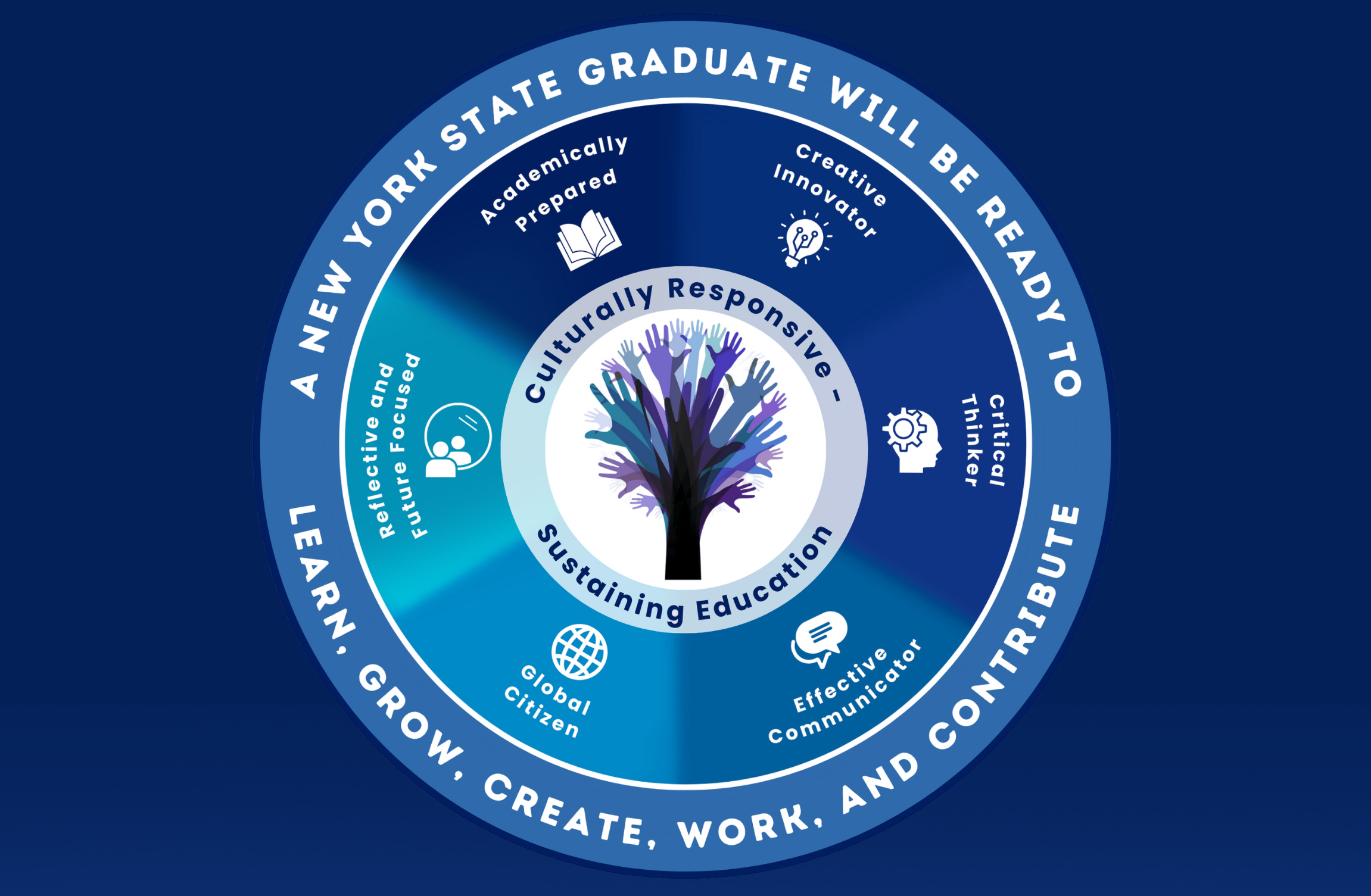
When NYS first introduced the idea of a Portrait of a Graduate, I was immediately intrigued. I found myself wondering: What is it that I want for my own children? What do I want for the children of the mothers I show up for every single day? What do I hope they know and can do by the time they graduate?
At the same time—almost serendipitously—my nieces and nephews were graduating from their universities. I sat there listening to these beautiful, inspiring commencement speeches, and again the inner dialogue started firing on all cylinders (much more articulately than I could ever say out loud):
Geez, these people are brilliant.
How do they come up with the exact words I’ve been thinking, but so much better?
Yes. This is what I want for my kids. This is what I want them to know and be able to do.
And like any good educator with a question and a quiet moment, I went down a rabbit hole:
What are the best commencement speeches of all time?
What advice do they offer?
What are the universal truths?

Here were just a few that stopped me in my tracks:
Bill Gates: “There is more to life than work… Take time to nurture your relationships, celebrate your successes, and recover from your losses.”
Ree Drummond: “Buckle up… life is beautiful, so I repeat, buckle up and laugh along the way.”
Hamdi Ulukaya: “There is nothing more rewarding than showing up in the world for other people, no matter how hard it may be.”
Dr. Marie Lynn Miranda: “You will face situations where you have no relevant expertise… In those moments, respond with love.”
Oprah Winfrey: “What will your essential service be? What really matters to you?”
Tim Cook: “Don’t waste time on problems that have already been solved… Look for the places where your greatest contribution is needed.”
The list goes on and on.
It is Advice Worth Carrying.
Subscribe for free-no pledge necessary!
And as I kept reading, I realized something: their advice pointed toward the same set of ideas. They spoke about resilience. Solving meaningful, unsolved problems and listening with empathy and responding with love, curiosity, or awe.
And that made me wonder:
How might we lead with these qualities at the center of everything we do?
Not as an “extra.” Not as an aside. Not as “one more thing.”
But as the thing.
The core.
The purpose.
The heartbeat of our work.
When NYS adopted the Portrait of a Graduate, something clicked for me. I began to see the connection between this universal “advice worth carrying”—what we want our children to become—and the work of helping them practice becoming those things every day, in real classrooms, with real teachers, with all the beautiful, messy humanity that comes with learning.
And then I stepped back and thought:
Isn’t this also the becoming that we are still doing as adults?
Just last week, driving home on the Belt Parkway, my kids and I were talking about how we respond to the everyday problems and challenges that naturally arise in a house full of teenagers. And my son quietly said, “You need to work on responding with awe, too, Mom.”
And all I could say was, “Yup. You’re right. I’m working on it.”
That moment, like so many in parenting, reminded me how hard it is to develop these skills fully. They are lifelong pursuits. They take awareness, practice, and humility. And we drove in silence, me thinking (again):
What if we began this work as early as possible?
What if we approached it consistently, purposefully, and willingly?
Seeing the Invisible
Here’s the part that keeps pulling at me:
The attributes of the Portrait of a Graduate are invisible.
I’ve been thinking about this for a long time. I even wrote about it once before. But after my most recent workshop, it hit me in a new way—just how invisible these attributes truly are. We say them. We post them. We celebrate them. But do we see them? Do we know what they look like in the lived, everyday moments of learning?
I keep getting transported back to a winter day in my former-former district. A new teacher—brand new to us, brand new to the profession—invited me in to observe her implementation of a unit of study we had been developing together. She took what our team created and added her own twist (because if you know teachers, you know that is where the magic happens). Once again, the student became the teacher.
She had her students explore and analyze a character's actions and thoughts through the lens of the Habits of Mind.
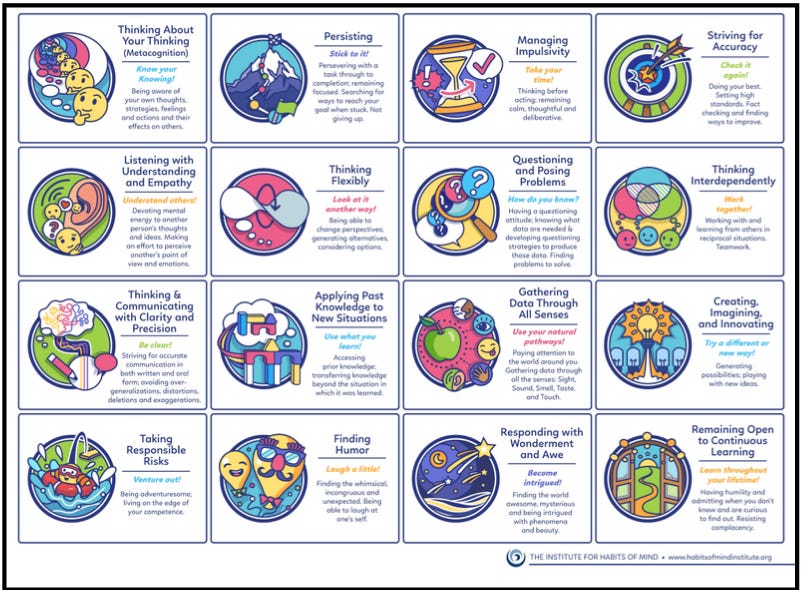
Now, I knew the Habits—developed by Art Costa and Bena Kallick. In fact, my friend and mentor Rob had taught them to us years earlier when I was on the administrative team at that very district. But this was the moment—this moment—when I finally saw them.
As teachable, visible, observable intellectual behaviors and nameable thinking.
I watched her students point to the text, turn to one another, and articulate the exact habit they saw unfolding in the character’s decision-making. I watched them name perseverance, question with curiosity, take responsible risks, and listen with empathy. They weren’t guessing. They weren’t reciting a definition.
They were seeing thinking.
They were naming thinking.
They were practicing thinking.
And, I thought:
Oh. This is what we mean by making the invisible visible.
This is what it looks like to take a whole bunch of abstract things—character, agency, identity, resilience, curiosity—and make it tangible enough for a twelve-year-old to point to and say, “There it is.”
This is also when I started to understand the Portrait of a Graduate differently—not as attributes that appear magically at the end of high school, but as dispositions or, preferably, intellectual behaviors we build, nurture, and practice—little by little, day by day—starting as early as possible.
Starting Early Changes Everything
Wow. Powerful.
Our middle school students were thinking about characters through non-cognitive factors and sharpening their literacy skills in characterization, theme, and the author’s craft.
And yet, it was so simple.
Just one shift: the purposeful integration of the Habits of Mind into an everyday lesson.
The example I shared was from a middle school classroom, but I wondered:
What would happen if we began this work in Pre-K?
That is precisely what we did in my next district. Those (brilliant) teachers made this work come alive. They embedded the 16 skills and dispositions into the fabric of ALL of our interdisciplinary units of study, where students explored questions like:
Why are interactions complicated?
Through that question, they moved across social studies, science, and ELA while leaning into the Habits of Mind—thinking with clarity and precision, thinking flexibly, and thinking interdependently.
See how we constructed our units throughout the year, combining NYS standards to create interdisciplinary units and grounding them in the Habits of Mind…

From there, the instructional strategies and routines naturally followed. Students had the time and space to practice these intellectual behaviors every single day.
The impact was profound.
Their writing soared.
Their language, vocabulary, and questioning blossomed.
Their work carried meaning and purpose.
Through this work in an IB school district, I began to understand the Portrait of a Graduate as intellectual behaviors we build, nurture, and practice—little by little, day by day—starting as early as possible and continuing through graduation.
But if I am honest, the name Portrait of a Graduate can be a bit of a misnomer. I love it, I truly do.
Yet it can imply that once we earn a diploma, we have reached the pinnacle of learning. And that is simply not true. Graduation is often the moment we begin to really become. These skills do not end at age eighteen.
They are life skills, human skills, and, as my son James reminds me often, skills we continue to develop long into adulthood. Skills so crucial that commencement speaker after commencement speaker highlights them time and time again. This should make us all go hmmm…
The Real Questions
become:
How might we build schools for the mind?
How might we place the Habits of Mind at the center, so all other work flows from them?
How might we shift from “What do we want our graduates to become?” to “How do we help our children become every day, in every way?”
This is the opportunity in front of us.
This is the invitation.
And it is Pre-K through 12.
Not just high school.
Not someday.
Now.
For Further Reading & Continued Exploration
Learn more about these intellectual behaviours captured in the POG from the different disciplines of study:
https://habitsofmindinstitute.org/
Explore UChicago’s work on noncognitive factors and readiness:
https://consortium.uchicago.edu/publications/readiness-college-role-noncognitive-factors-and-contextVisit Families and Work to learn about executive functioning and child development:
https://www.familiesandwork.org/early-childhood/
Call to Action
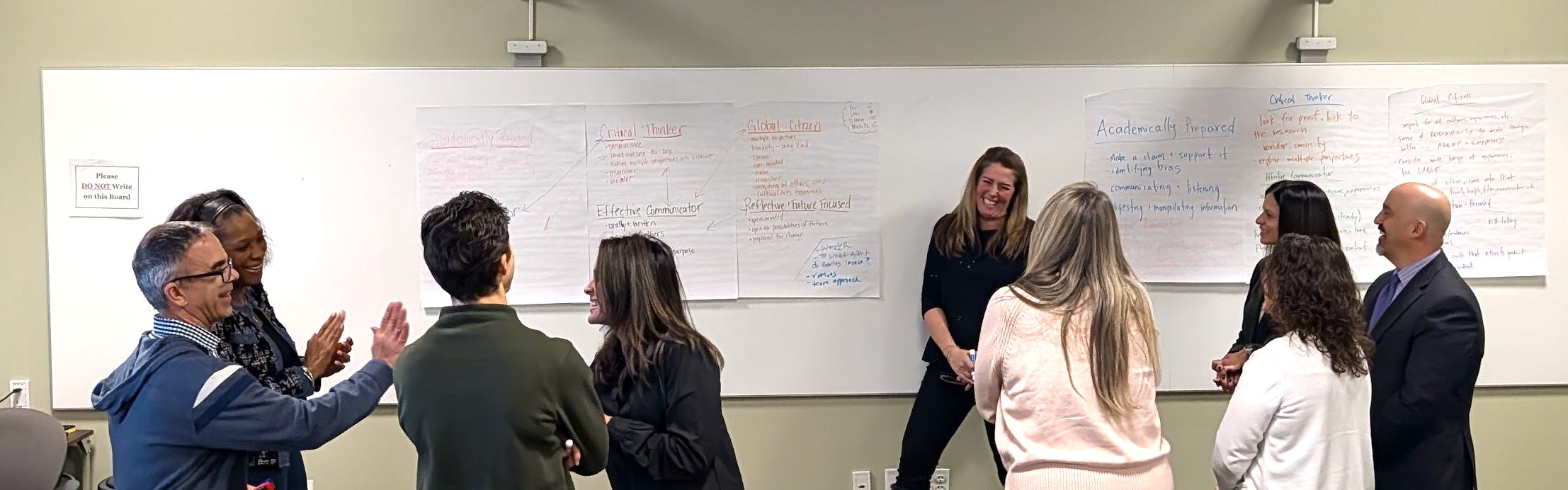
If your district is beginning to explore the Portrait of a Graduate or wants support in making these invisible attributes visible in everyday classrooms, I would love to think through that work with you. This is some of the most meaningful Pre-K through 12 work we can do. And it is fun too!
Reach out if you want to continue the conversation or bring this work to your school community.
nicole@nicolemoriarty.net
-Nicole & Trici
This post was originally published on Dr. Moriarty's Substack.
Read the original on Substack