What Grows After We Let Go
Coaching, Collaboration and Continuous Growth by Nicole and Trici
From In the Draft — Dr. Nicole Moriarty's Substack
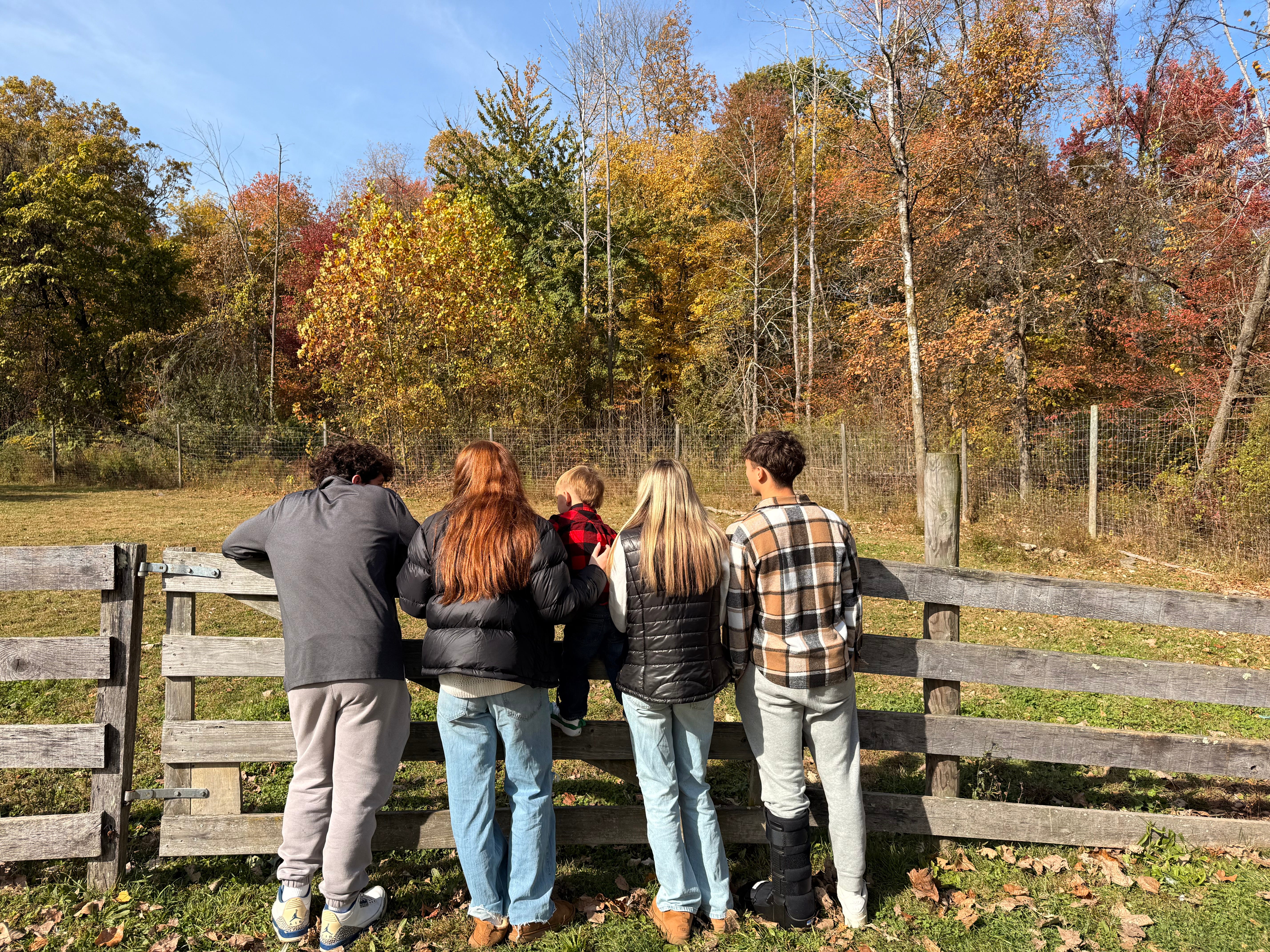
Walking Through the Orchards
This past week, the Northeast has finally turned over into fall. The leaves have taken on their bold colors, tumbling through the crisp air as the humidity at last gives way to cooler days. Families are visiting farms—an ode to an era long past but a tradition that endures—coming together to walk, talk, laugh, and savor those irresistible cider donuts.
As I walked through the orchards, watching children climb trees, search the ground for hidden apples, and marvel at the farm animals, I was reminded just how brilliant and curious children are. They are marvelous beings, and we are so fortunate to be part of their journey.
Naturally, my mind wandered to schools—to the teachers and administrators who dedicate themselves so fully to these very same children. And then, to the work we’ve been doing: creating parent resources to support families in their children’s reading journeys, and designing teacher tools to sustain professional growth and learning.
So today, we wanted to talk about one of the most powerful ways to continue that support: coaching—how it nurtures reflection, builds capacity, and keeps the work of teaching and learning both human and hopeful.
The Paradox We Face
All the tools, strategies, and routines we’ve been writing about—from integrated curriculum design to cognitive-based practices that fuel the brain—are the very fuel that leads to better student outcomes, both in the here and now and in the future.
And yet, across districts, we continue to see a familiar pattern:
Schools are purchasing new curricula that promise these very characteristics but rarely deliver on what they tout.
In the same breath, we hear teachers express frustration—piloting yet another “program,” or feeling disengaged from one that doesn’t inspire either them or their students. At the same time, we also hear something else: teachers asking to be handed something to teach, to be told what to do. And then, just as passionately, we listen to them say they want autonomy.
It’s a paradox—and as leaders, it’s tough to navigate.
And yet, there is a way.
The Three Essentials
First, our leaders need time and space to truly lead instruction—to be the instructional leaders they were trained and called to be. The reason they entered this profession in the first place. They need time to coach, to think, and to grow alongside their teams.
Second, as instructional leaders, we must lead curricular and instructional design ourselves—not outsource it to large companies. Too often, these corporations profit off the backs of our teachers and the brains of our children. And yet, if we look at our national results—on PISA, on NAEP—we see something startling: despite the millions of dollars poured into prepackaged programs, we are not improving.
We go to conferences. We earn advanced degrees in education. We study Universal Design for Learning, Understanding by Design, and the science of how the brain learns. We know this work.
And we need to lead with these ideas in mind, making time and space to co-design curriculum and instruction with our teachers, not for them. That means intentionally weaving literacy across the content areas, so that every subject becomes a space for thinking, reading, writing, and discourse. It also means integrating the Habits of Mind—the life and learning skills that help students persist, question, think flexibly, and communicate with empathy and precision.
When we build with these principles at the center, we move beyond compliance to actual coherence. We create classrooms where students don’t just absorb knowledge, they use it, transfer it, and grow from it. And that’s how we set every learner up for success, not just in school, but in life.
Third, once the curriculum is written, the work isn’t done—it’s only beginning. That’s where coaching comes in. Implementation is not a linear path; it’s a human one. We all move through stages of excitement, doubt, adaptation, and mastery. Implementation science tells us that this is normal, it’s expected. And when leaders coach through that process, rather than simply manage it, teachers feel supported, capable, and empowered.
Before We Begin
Let’s start where all real change begins—with honest reflection on our own practices.
Questions to Ask Yourself About Your Organizational Framework
Before we can talk about coaching cycles, we have to start by looking inward—at our own systems, structures, and the ways we organize the work itself. Because if we want a culture of coaching and continuous growth, it has to be designed for it.
Ask yourself:
Do you have instructional coaches? How many? Can they reasonably support the number of teachers they’re assigned to work with? Do they get ongoing training and support? Do they get to work with experts in the field to continue their learning in an ongoing and supportive way?
Is coaching available in every school, or is access uneven across the district?
Is there genuine alignment and cohesion in your instructional framework?
Can your administrators step into the role of coach? Do they have the time, knowledge, and skill set to guide the work of others meaningfully?
What does your school schedule communicate about what you value most—especially when it comes to instructional time, collaboration, and professional learning?
At The End of The Day
The way we design our systems reveals what we believe. We say this often—we understand it deeply—and yet, we have to ask ourselves: are we truly committed to designing systems that lead to better experiences for both students and teachers?
When we pause to really examine these questions, patterns begin to emerge. Coaching isn’t about simply assigning someone to a role—or worse, assuming that a title automatically gives someone the expertise to coach. And it’s certainly not about piling coaching on as “one more duty.”
Coaching is about creating the conditions for growth.
If our structures don’t make space for reflection, if our schedules don’t honor collaboration, and if our leaders don’t have the time, tools, or trust to coach well, then even the best intentions fall flat.
Coaching cycles only thrive in cultures that value growth over compliance and people over programs. When learning is truly the priority, everything else follows.
And when we prioritize our culture, we don’t have to chase morale. Our teachers thrive, and our students soar.
Here’s the secret—well, it’s not really a secret. We know all about this. Collective efficacy—the belief that we, together, can make a positive impact on the learning and outcomes of our children—is where the true power lies.
Prioritizing coaching is prioritizing a learning organization.
Prioritizing a learning organization is prioritizing our children.
Prioritizing our children is prioritizing coaching.
And here’s the real secret: you don’t need expensive programs for that. Spend money wisely—invest in people.
Seasons of Growth
Walking through the orchards this weekend, I couldn’t help but notice how naturally children lean into curiosity—how they explore, question, and wonder. This season is inviting us to do the same.
As the trees shed their leaves, perhaps it’s time for us to shed some of our own past practices—the habits, routines, and structures that no longer serve growth. What if we used the stillness of winter to pause, reflect, and ask better questions? To make space for curiosity again.
As I stood there, I marveled at how my own children and niece walked up the hill to go apple picking without us, for the first time in fifteen years. In that moment, I felt something I wasn’t expecting. I was awed by them. They were leaving us behind, armed with everything they needed to thrive on their own. A tear fell down my cheek—it was a happy tear.
We had coached them this whole time, and now they were ready.
Isn’t that what we want for our administrators? And for our teachers? And for our students?
Because like those children wandering through the orchards, full of wonder and discovery, we too can reemerge in the spring with a renewed sense of meaning and purpose—ready to grow something beautiful together.
Nicole & Trici
This post was originally published on Dr. Moriarty's Substack.
Read the original on Substack