Walking Beside Our Teachers: The Power of Instructional Coaching
Dr. Nicole Moriarty and Mrs. Trici Broderick, Ms.Ed.
From In the Draft — Dr. Nicole Moriarty's Substack
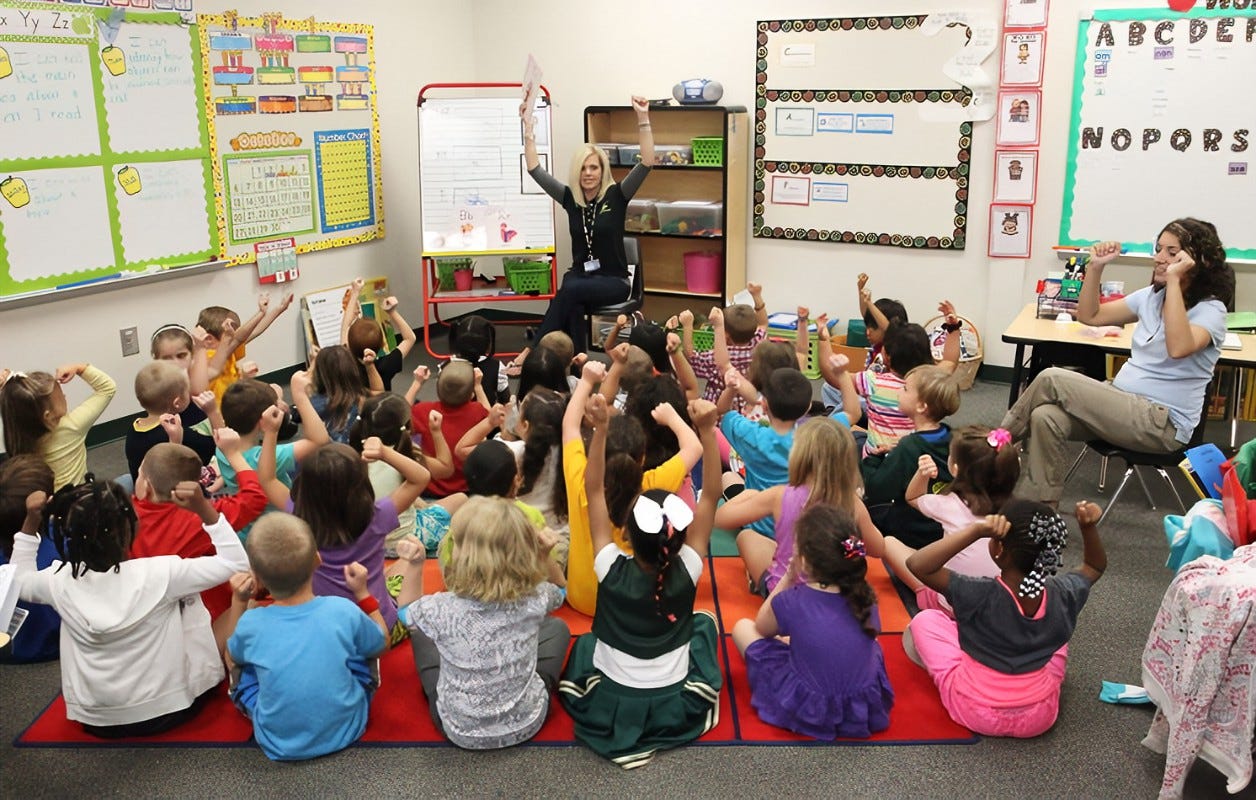
Not long ago, I was standing in the back of a second-grade classroom during a reading block.
The brand-new teacher—bright, energetic, and deeply committed—was leading a phonics lesson.
She was doing her best, but I could see the frustration flash in her eyes.
Her training hadn’t prepared her for this.
She knew how to read, of course. She’d read to her own children for years. She loved books.
But teaching a child to read?
That’s a whole different science.
The truth is, most teachers were never explicitly taught in college how to teach reading or writing.
Unless they specialized in reading instruction, there were:
No deep courses on phonology.
No coursework on oracy—teaching students to articulate ideas clearly through speaking and listening.
No in-depth discussions on text structures.
No guidance on how to build critical thinking skills through science-based literacy strategies.
Yet here we are, in the era of the Science of Reading, expecting every teacher—regardless of subject—to be a teacher of reading and writing.
Enter the Instructional Coach
In this moment, more than any other, nothing is more important than having instructional coaches in our schools.
An instructional coach isn’t a supervisor with a checklist.
They aren’t there to “catch” mistakes.
They’re there to walk beside teachers—shoulder to shoulder and hand in hand—helping them bring research into practice, one lesson at a time.
They are part cheerleader, part mentor, part mirror, and part bridge between what research says works and what’s actually happening in the classroom.
I’ve seen it firsthand—because I was that coach.
I modeled numerous lessons in phonemic awareness.
The teacher would watch, take notes, and ask questions.
Next time, we co-taught the same lesson together.
Soon after, the teacher tried it on her own—knowing she had someone like me to debrief with afterward.
She saw the difference almost immediately—not just in her teaching but in the success of her students. And coaching didn’t stop there. It extended beyond phonemic awareness, into comprehension strategies, vocabulary development, writing instruction, small-group work, classroom routines—every pedagogy and initiative she was expected to employ.
Years later, she still values coaching as an essential part of her growth.
The Power Beyond the Workshop
Professional learning days are important. They introduce new ideas, new strategies, new research.
But the real learning—the kind that changes practice—comes in the follow-through with coaching.
It’s not about hearing it once in a presentation.
It’s about seeing it modeled, trying it in your own classroom, getting feedback, adjusting, and trying again—until it sticks.
That’s where growth lives.
Not in a binder on a shelf, but in the daily rhythm of real-time, side-by-side learning where we problem-solve, we adjust, and we celebrate small wins together.
What Great Coaches Do
The best instructional coaches…
Tour classrooms not to judge, but to understand the rhythms, routines, and realities.
Collaborate to plan lessons that meet both curriculum goals and student needs.
Model and co-teach so teachers see strategies in action, not just in theory.
Debrief with empathy—celebrating the bright spots and gently unpacking the challenges.
Inspire trust by being authentic, patient, and compassionate.
This is not about “fixing” teachers.
It’s about unlocking what they already have inside them and building a shared confidence in our collective ability to meet students’ needs.
Why This Matters Now
We can’t expect teachers to implement what they’ve never been taught.
We can hand them curriculum, assessments, and pacing guides—but without the right coaching, most will be left to figure it out alone.
And in the high-stakes world of literacy instruction, “figuring it out” on your own can mean years of trial and error—years our students don’t have to spare.
Professional development days are helpful, but they’re like reading the recipe without ever stepping into the kitchen.
Instructional coaching?
That’s cooking together—tasting along the way, adjusting the seasoning, and serving it up with confidence.
When we do it together, the success belongs to all of us.
The Ripple Effect
When coaches and teachers work as a team…
We grow in skill and confidence.
We make instruction more intentional and effective.
We ensure students—especially those who struggle—get exactly what they need to thrive.
And over time, you can feel it.
The school shifts.
The culture shifts.
Literacy isn’t just a subject anymore—it’s the heartbeat of the building, grounded in teacher collective efficacy.
THE POWER OF WE
in Instructional Coaching
Instructional coaching isn’t about “me” teaching “you.”
It’s about us—collaborating, reflecting, learning, and growing side by side.
When we…
Plan together, lessons become sharper.
Teach together, strategies come alive.
Reflect together, growth happens faster.
The coach isn’t “another set of eyes.”
They’re another set of hands, another heart in the room.
The magic is in the we.
Coaching turns your classroom into our classroom—
and every student’s success into our shared victory.
We are in a moment where the Science of Reading demands more precision, more intentionality, and more collaboration than ever before.
“Tell me and I forget, teach me and I remember, involve me and I learn.”
—Benjamin Franklin
If we truly want all students to succeed, we must invest in the people who make that possible.
Because when you invest in an instructional coach, you’re not just hiring one more staff member—
you’re investing in us.
And together, we will keep every classroom in your school burning bright.
Call to Action
Let’s make this a team effort. Whether you’re an administrator ready to bring coaching into your building, a teacher eager for collaborative support, or a district leader shaping professional learning—don’t let this be a solo journey. Invite us in. Let’s walk this path together.
Because when we invest in our teachers through coaching, we’re investing in every single student they will ever teach.
This post was originally published on Dr. Moriarty's Substack.
Read the original on Substack