Talking Circles to Tassels: How Early Conversations Shape Tomorrow’s Thinkers
What Life and Learning Skills—and SEL—Look Like in PreK Dr Nicole Moriarty & Mrs. Trici Broderick, Ms.Ed
From In the Draft — Dr. Nicole Moriarty's Substack
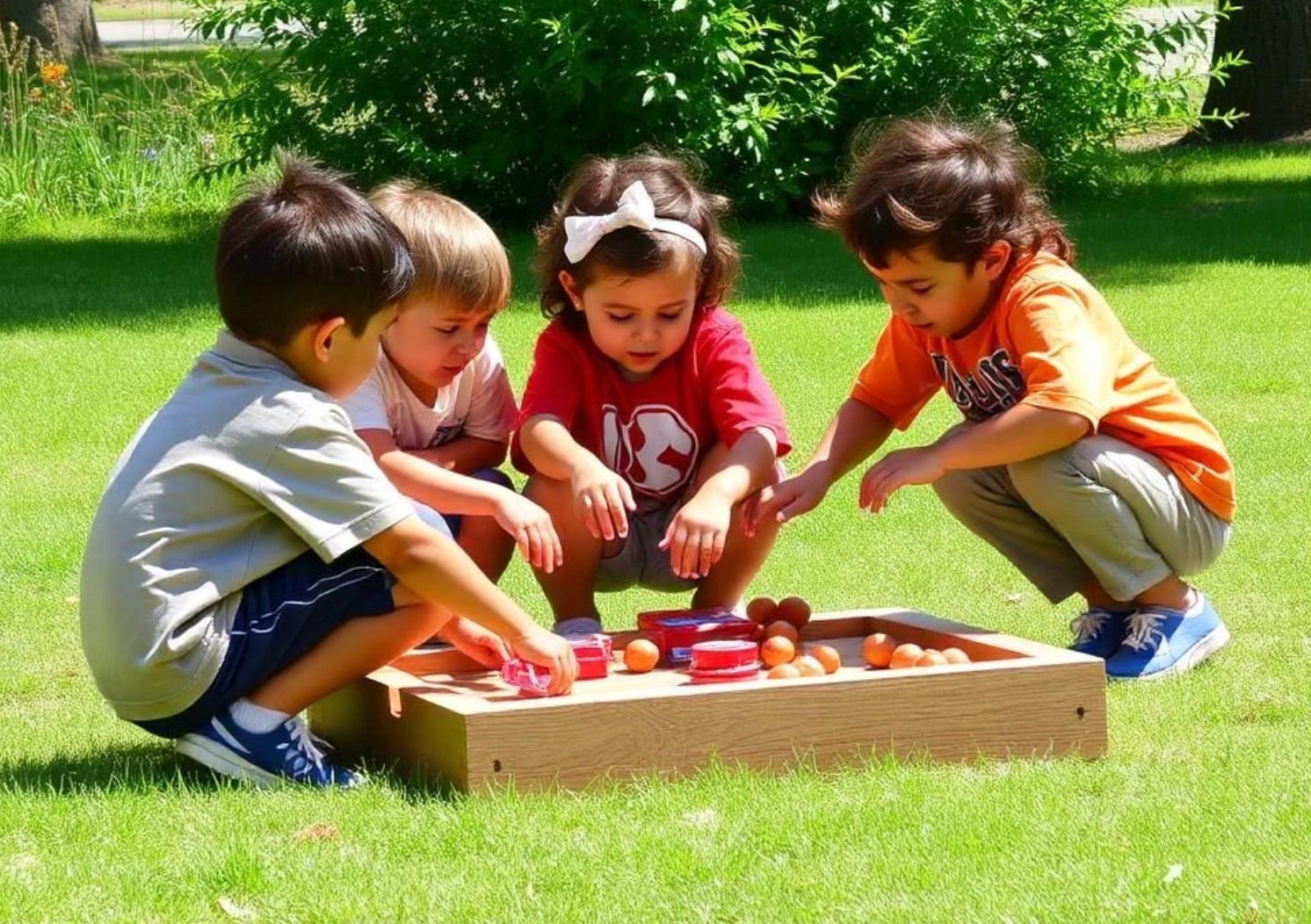
Last week, we explored the Portrait of a Graduate—the skills, habits, and dispositions we want students to carry into the world.
What we know: those skills don’t just appear in twelfth grade. They are built over years—often starting in rooms where the chairs are small, the play is big, and the learning is joyful.
And we’re not talking about extra “social skills” lessons or worksheets. We’re talking about intentionally weaving these skills—social and emotional learning (SEL), life and learning skills, and the Habits of Mind—into the daily flow of learning so that collaboration, communication, problem-solving, and perspective-taking become part of the air students breathe.
Think of these three frameworks as strands of the same rope. Together, they create the foundation for both academic and lifelong success.
Subscribe for free, and we'll keep the conversation going!
Bonus Audio!
Week 2 of our mother–daughter experiment! Charlotte (15) and I recorded a 9-minute reflection for those who like to listen on the go.
Still a little weird, still a little scripted, but we’re learning as we go, and that’s the point.
Take a listen, then scroll down for the full post—we only scratched the surface.
What We Mean by SEL
We define SEL as an integral part of education and human development. It’s the process through which all young people and adults:
Develop healthy identities
Manage emotions and achieve personal and collective goals
Feel and show empathy for others
Establish and maintain supportive relationships
Make responsible and caring decisions
When SEL is built into academics from the start, the results are powerful. CASEL’s decades of research show that schools that integrate SEL see:
11% point gains in academic achievement
Better classroom behavior
Greater emotional regulation and decision-making skills
A New Way to Make Growth Visible: The Badge System
One of the most powerful tools we’ve used to make these skills tangible is a badge system—a way for young learners to earn badges at their own pace as they demonstrate specific skills and concepts from the New York State Pre-K standards.
Each badge is intentionally designed to connect to the seven essential life skills outlined by Ellen Galinsky in Mind in the Making and The Breakthrough Years:
Focus and Self-Control
Perspective Taking
Communicating
Making Connections
Critical Thinking
Taking on Challenges
Self-Directed, Engaged Learning
Each badge also aligns with one or more of Art Costa and Bena Kallick’s Habits of Mind and at least one SEL competency, so we’re making growth visible not just in what students know, but in how they relate, reflect, and respond.
By naming these skills, celebrating them, and sending them home in Badge Books throughout the year, we make progress visible—not just to us as educators, but to families and the learners themselves.
Our First Unit: “All About Me”
We begin the year with a four-week unit: All About Me. It’s a launchpad for both community and skill building.
We explore favorite things, families, and feelings. Students create self-portraits, pretend to be family members in dramatic play, and build “All About Me” books. We introduce bright colors and shapes, new letters and numbers, and anchor it all in joyful, hands-on experiences.
Of course, we are learning phonology, fluency, math, and other knowledge-building topics as well. Remember, this is a comprehensive, interdisciplinary, knowledge-building curriculum with literacy routines purposefully embedded throughout.
Our Habit of Mind focus—Listening with Understanding and Empathy—invites us to notice not just words, but facial expressions, body language, and feelings. We practice patience, turn-taking, and kindness in every part of the day. And because our badge system and SEL work are woven through, these experiences become opportunities to earn recognition for authentic skill use—skills that will serve students far beyond PreK.
Ultimately, these foci are directly aligned with the Portrait of a Graduate (or Portrait of a Learner) that many local entities and states have already adopted.
A Month in Action: Badges Come to Life
Talking Circle Badge
During a class meeting, a student shares a favorite item. Another student asks to have it. The moment becomes an organic lesson in respect and empathy.
I can: listen to others, wait my turn to speak, and care for belongings that are not mine.
Life Skill: Perspective Taking
Habit of Mind: Listening with Understanding and Empathy
SEL Competency: Social Awareness – Recognizing and respecting others’ feelings, perspectives, and belongings
POG Attribute: Reflective and Future-Focused
Collaboration Badge
Two small groups run short on materials in the block area. They decide to combine projects into something entirely new—a “double-decker” bridge.
I can: work with others to share materials and ideas, adapt plans, and solve problems together.
Life Skill: Collaboration, Taking on Challenges
Habit of Mind: Thinking Flexibly
SEL Competency: Relationship Skills – Building trust, communicating clearly, and working toward a shared goal
POG Attribute: Creative Innovator
Sorting Badge
Leaves collected on a nature walk are first sorted by size, then re-sorted by texture after a peer’s suggestion. The group discovers new ways to describe and compare.
I can: classify objects in more than one way, explain my thinking, and use new describing words.
Life Skill: Critical Thinking, Making Connections
Habit of Mind: Thinking Interdependently
SEL Competency: Responsible Decision-Making – Considering multiple possibilities, weighing new ideas, and making thoughtful choices
POG Attribute: Critical Thinker
Communication Badge
In the dramatic play “restaurant,” students rotate roles—chef, server, family members—practicing turn-taking, ordering, and problem-solving (“We’re out of pizza—what now?”).
I can: speak and listen respectfully, ask questions to learn more, and respond to others with care.
Life Skill: Communicating
Habit of Mind: Thinking About Your Thinking or Thinking and Communicating with Precision and Clarity
SEL Competency: Self-Management & Social Awareness – Managing emotions during role-play and adapting responses to different social situations
POG Attribute: Effective Communicator
Why This Matters
Research and common sense agree—before students can use AI or other technology wisely, they must be able to think critically, ask meaningful questions, listen to different perspectives, and collaborate toward solutions, among other life and learning skills.
The badge system provides a way to recognize, acknowledge, and celebrate these human skills in students as early as the earliest grades. It shifts the focus from compliance to capability, from “covering content” to cultivating the lifelong habits that will define their success.
When research from CASEL, Ellen Galinsky, and Art Costa converge with classroom practice, we see the power of this work—it’s not just theory, it’s lived experience in PreK classrooms. And when done well it is magic that can change the trajectory of a child’s life forever.
Call to Action
Yes—we know there are aspects of learning that require structured programs. Phonemic awareness and phonics are prime examples. Unless we can afford to get every teacher trained in Orton-Gillingham, we will be beholden to high-quality programs that ensure consistency and fidelity.
But the rest of the day does not have to be dominated by programs that ask students to fill out worksheets with little relevance to their lives or life’s work at this stage—and that rob children of the time and space to play, connect, and engage in dialogue.
We can make learning outcomes visible to all—students, families, and educators—through carefully crafted badge systems tied to interdisciplinary units of study. By strategically embedding the Habits of Mind, the seven life and learning skills, and the five core SEL competencies throughout the elementary years, we can help educators intentionally weave them into the day, week, month, and year using brain-based pedagogy that allows students to practice these skills while learning essential knowledge of the world.
We can move away from tech-heavy days and put manipulatives, materials, and opportunities into children’s hands so they use their bodies and brains to learn. The more senses they use, the more connections they make with their peers, teachers, and the world around them, the more creative they become—and the more deeply they learn. And the better life outcomes they will experience.
We can embed social studies and science into everyday work, helping students understand the world around them. We can protect time for play-based learning alongside explicit instruction—finding the balance that keeps curiosity alive while building the foundations they need. And yes, we can have a Curiosity Badge too!
If we want graduates who can think, connect, create, and care, we must start by reimagining the way we measure and make visible what matters most—beginning in PreK, and never letting go. SEL, life and learning skills, and the Habits of Mind aren’t an “extra”—they’re the heart of this work, the throughline that turns academic learning into lifelong capability.
If we want tassels to represent more than test scores—if we want them to symbolize capable, connected, creative thinkers—we must start with talking circles.
Resources to Inspire Your Work
If you’re ready to bring badges, purposeful play, and interdisciplinary learning to life, here are a few resources to get you started:
Badge System Overview – A quick look at how a badge system can make learning visible for students, families, and educators.
Badges in Action – See how badges connect life skills, Habits of Mind, and SEL competencies in everyday classroom moments.
Purposeful Play & Interdisciplinary Units – Ideas to help you design learning experiences that weave together content, life skills, and joyful, hands-on exploration.
From talking circles to tassels, every step in between matters. Let’s make the journey intentional, joyful, and visible.
We invite you to reach out to us. We would love to partner with you to help make this a reality in your early childhood classrooms from Pre-K to Grade 2. We can transform learning for all!
Next week, we’ll continue to explore these ideas and concepts in the older grades—because they’re worth repeating, and because they change the way school feels for everyone in it.
This post was originally published on Dr. Moriarty's Substack.
Read the original on Substack