Interest Inventory: Know Your People
Take a moment to see the people behind the roles.
From In the Draft — Dr. Nicole Moriarty's Substack
If you’re like us and do your “reading” by listening—on your commute, while making dinner, or being a full-time Mommy Uber driver—this one’s for you.
If you’ve been following along with our Beyond the Box series, you already know—we’re not into surface-level change. We’re here for the real stuff. The kind that starts with people, not programs.
Last time, in You Don’t Have to Chase Morale When You Lead with People, we talked about how listening differently—really listening—can shift everything. When you reframe complaints and assume the best in others, you stop chasing morale and start building it, day by day, in the way you show up.
But here’s the thing:
That’s just the beginning.
Once you’re grounded in that mindset, the next step is to become curious.
What are people really asking for? What do they actually need?
That’s where this post comes in. We’re sharing one of our favorite tools—simple, powerful, and surprisingly effective—for getting underneath the surface and uncovering what really matters to the people you work with.
If you’re just jumping in now, welcome! You can catch the full Beyond the Box series right here—full of real stories, practical tools, and ideas you can use right away.
Let’s dig in.
Once we’ve grounded ourselves in positive presuppositions, believing that people are advocating for good things, and made space to reframe complaints as clues, we’re ready for the deeper work of understanding what someone is really asking for, and why.
That’s where Interest-Based Problem Solving comes in.
Position vs. Interest: What’s the Difference?
A position is what someone says they want.
“We need a new curriculum.”
“I want desks in rows.”
“I need a car.”
It’s tempting to respond to positions at face value. However, when we do, we often become stuck in either/or thinking, debating the issue instead of understanding the underlying need.
Instead, try asking:
Let’s pretend you already have that. What would it give you?
What would having that do for students?
What’s the positive outcome you’re hoping for?
That’s where the real insight lives.
An interest is the positive consequence someone hopes to achieve.
Not “a car,” but getting to work on time.
Not “rows,” but focused, less-distracted students.
Not “a new curriculum,” but more meaningful learning and less prep.
Once you uncover the interest, the conversation shifts, especially with the interest check question.
Try the “Interest Check”
When things feel stuck, offer a forced choice to help clarify what really matters.
If you had to choose between having a car and getting to work, which would you pick?
Almost always, the answer is getting to work—because that’s the real interest. The car was just one way to get there.
Now apply that same thinking in a school context:
If you had to choose between desks in rows or students being more focused with smoother transitions, which would you choose?
Most will choose focused students, because that’s the actual goal. Rows were just the method they were familiar with.
Once that clarity is on the table, a new kind of conversation can begin:
What are other ways we can support students being more focused, beyond just rows?
This kind of shift helped us during recent conversations about AI in classrooms. Some teachers initially wanted to ban AI entirely, worried about plagiarism or students bypassing authentic learning, concerns that have existed in different forms since the start of schooling.
But when we slowed down and asked interest-based questions, something deeper emerged:
They weren’t trying to block a tool. They were trying to protect their thinking.They wanted to ensure students developed critical writing, problem-solving, and ethical reasoning skills.
As one teacher reflected:
“I didn’t want to ban AI, I don’t want kids cheating themselves. This gave me the space to think and talk about it. It’s so simple and so powerful.”
That insight opened the door to meaningful dialogue:
How could we model and teach the ethical use of AI?
How could we preserve and elevate core academic skills while preparing students for the world they’re growing up in?
How might we make sure both interests are met?
That’s what makes this approach different. It shifts the dynamic from a tug-of-war over positions to a shared exploration of possibility.
And the impact reaches far beyond problem-solving. As another educator shared:
“I used to think I knew how to interact with people in respectful ways, where they felt valued, but now I know there are so many more ways to create an environment that builds trust. In my conversations, I need to lift others, and this is one way to do it.”
This is what it means to lead with people first.
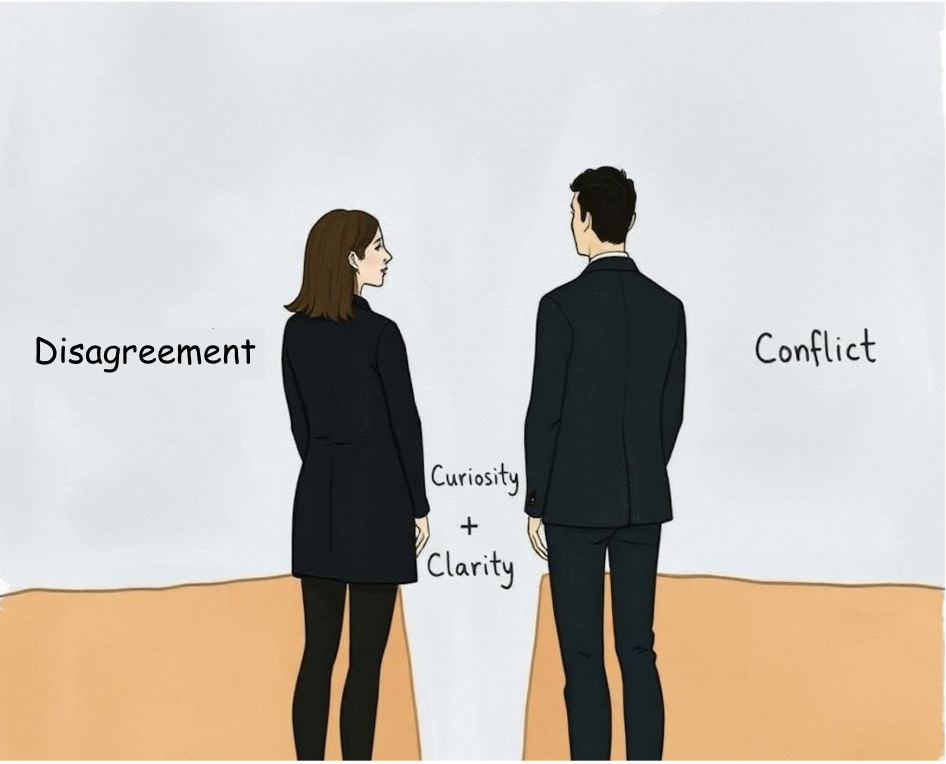
When you lead with curiosity and clarity about interests, you're not just solving problems. You’re building trust, deepening connection, and making it easier for everyone to move forward together.
This post was originally published on Dr. Moriarty's Substack.
Read the original on Substack