From Coverage to Competencies: Reimagining Social Studies in the Hinge Years
Why grades 4–8 are the perfect time to build skills, competencies, and civic readiness. Dr. Nicole Moriarty
From In the Draft — Dr. Nicole Moriarty's Substack
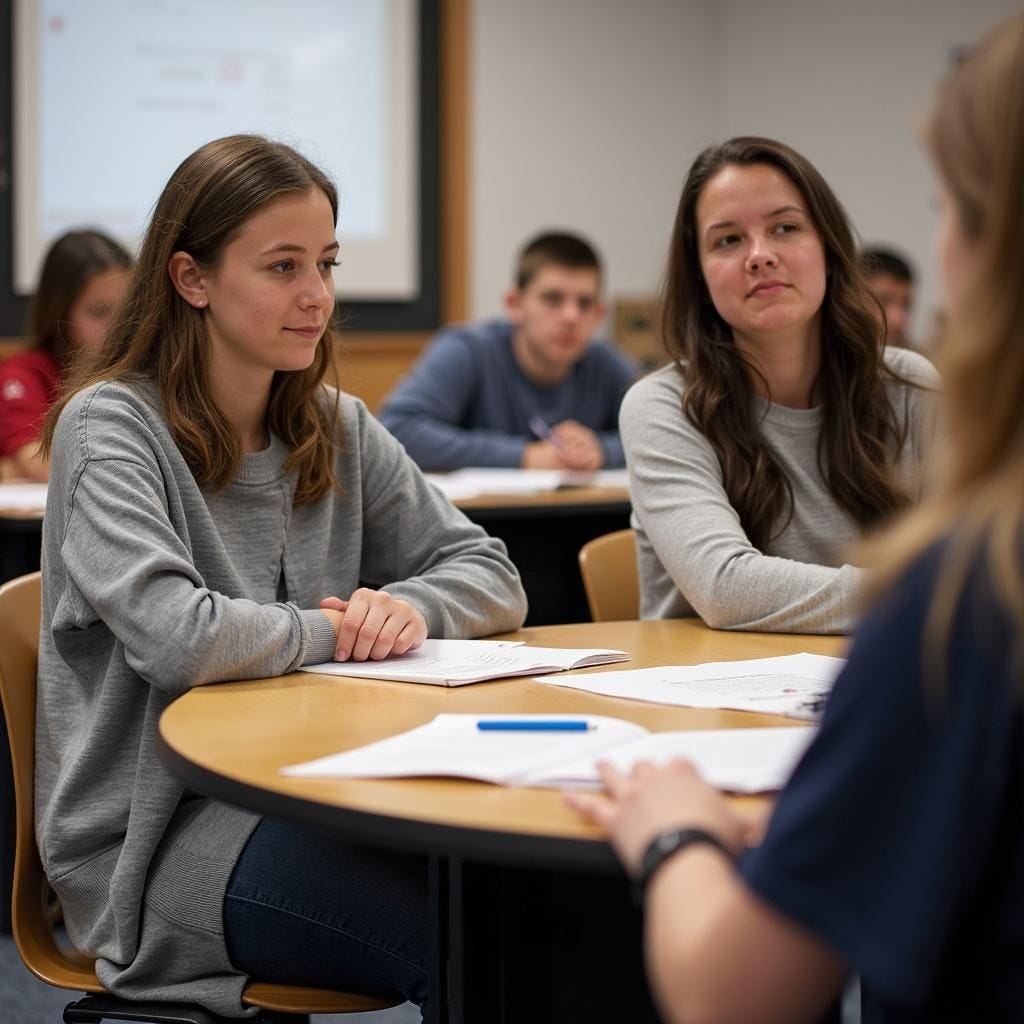
For years, social studies has been treated like the “forgotten subject” — too often reduced to coverage and chronology. But grades 4–8 are hinge years, the moment when students are still learning how to learn. What if social studies became the workshop where they practiced not just skills, but competencies for civic life? In this week’s post, we discuss why it matters, how it looks in practice, and why shifting from coverage to competencies can make a significant difference for our learners.
Why Social Studies in the Hinge Years Matters
I remember about 20 years ago, walking out of a high school at the end of the day. I had just left my role as an assistant principal and was moving into a director position in the same district. One of my favorite colleagues of all time — a brilliant teacher and college friend — looked at me and said:
“When you go up there, maybe you can help make sure that the lower grades are teaching social studies.”
That moment has stuck with me ever since.
It became a mission of mine — not only to ensure that social studies is taught consistently across the grades, but also to expand the vision: to utilize social studies as a powerful vehicle for building skills and competencies for all learners.
Because here’s the truth: grades 4–8 are hinge years. They’re the bridge between learning to read and reading to learn, between following directions and taking charge of one’s own learning.
And nowhere is this more important — or more overlooked — than in social studies.
Too often, social studies gets reduced to coverage: racing through timelines, memorizing vocabulary, checking off facts. But our students deserve more than “marching through history.”
These years are when students are still learning how to learn. That makes social studies the perfect place to give them structured opportunities to ask questions, wrestle with evidence, connect past to present, and practice the competencies of civic life.
Subscribe for free, and we'll keep the conversation going!
Bonus Audio! Put your earbuds in, go for a walk, and listen. Come back later and make sure to read the article as well!
From Skills to Competencies
Let’s be clear about the distinction:
Skills are discrete and measurable — things like:
Summarizing a text → practiced through Keys to Literacy’s two-column notes, annotations, or structured summaries.
Citing a source → supported by documents with constructed responses and extended prompts that ask students to think about enduring issues.
Identifying cause and effect → developed with graphic organizers such as Keys to Literacy’s Top-Down Topic Webs, sequencing activities, sorting, or guided timeline analysis.
Competencies are broader, transferable capacities — built when students repeatedly practice strategies that require them to:
Communicate effectively → through Spider Web Discussions, Socratic seminars, peer feedback routines.
Engage in civil discourse → using debate protocols, structured academic controversy, or perspective-taking routines.
Analyze perspectives → by comparing primary/secondary sources, interrogating bias, or conducting empathy mapping.
Question power → through essential questions, inquiry cycles, student-generated questions using Bloom’s Taxonomy, and case studies that push students to ask “Who benefits? Who decides?”
Think critically → developed through protocols that require students to:
Generate questions using Bloom’s Taxonomy.
Create guiding questions for inquiry.
Work toward answering essential questions over time.
Analyze, evaluate, and synthesize information across sources.
Apply historical thinking to contemporary problems → using current event connections, project-based tasks, and civic action simulations.
Skills can be checked off.
Competencies must be cultivated through protocols and strategies that turn classrooms into workshops of civic readiness.
A Unit Example: Power, Authority, and Governance
Consider our Grade 9 unit on Power, Authority, and Governance.
The essential question:
What is the relationship between the ruler and the ruled, and through what means do rulers gain, consolidate, and maintain power?
Students move through an inquiry process, build knowledge of Absolutism and the Enlightenment, and then connect those ideas to today’s governments and leaders. They analyze divine right, absolutism, sovereignty, social contract, and the consent of the governed, but they don’t stop there.
They debate.
They map.
They create digital stories.
They connect historical concepts to current events.
But the most transformative element is the Spider Web Discussion:
Students prepare by generating essential and supporting questions tied to the unit’s big ideas.
They practice with literal and inference questions, then move into higher-order prompts.
They use student-created rubrics to guide their participation and assess their growth.
Teachers track their own dialogue using spiderweb mapping protocols.
They debrief and reflect — not just on what was said, but also on how they presented themselves as learners and communicators.
The teacher doesn’t dominate. Students drive. The room becomes a workshop where content knowledge and civic competencies are developed in tandem.
Why Spider Web Discussions Work
Talk matters. Research shows that in high-achieving classrooms, students, not teachers, do the majority of the talking. In low-achieving classrooms, teacher talk dominates.
Spider Web Discussions flip the script by:
Making student talk central.
Embedding evidence, questioning, and perspective-taking into every exchange.
Building habits of collaboration, reflection, and respectful debate.
This is how students practice the competencies our democracy demands. They don’t just learn about power — they experience it, share it, and reflect on it in action. And identify where they can improve upon their dialogue, working together to set goals and action steps for the next Spider Web Discussion. Rinse and repeat each subsequent time.
Connecting to Civic Readiness
New York’s Seal of Civic Readiness and the Portrait of a Graduate call for graduates who are:
Effective Communicators
Critical Thinkers
Global Citizens
Reflective and Future-Focused
When we embed practices like Spider Web Discussions, inquiry-based units, and visible learning progressions, we stop hoping students become these things. We start deliberately teaching and practicing these competencies.
To truly prepare students for civic readiness, units must also provide space for performance-based assessments. In our Power, Authority, and Governance unit, for example, students had opportunities to:
Solve a real-world problem related to power, authority, and governance.
Engage in service learning or participate in local government in some capacity.
Develop their own passion projects connected to this enduring issue.
This is where real learning takes place. Skills and competencies are practiced. Students jump out of the textbook, work collaboratively, and share in something bigger than themselves.
The key is committing to this work and ensuring that students have time for it. In my experience, teachers who introduce these opportunities at the beginning of the unit see students who are super engaged and excited, because they know from day one that their learning is leading to something meaningful.
Embedding AI into the Humanities
One of the most urgent conversations right now is about artificial intelligence. Too often, districts rush to create standalone AI electives — well-intentioned, but ultimately siloed.
We know, because we did it.
In our Inquiry elective, students explored the topics of prompt engineering, media literacy, sourcing, bias, and the ethical use of AI. The course was engaging and valuable. But here’s what became clear:
When AI is separated into its own class, it risks becoming an “extra.” Not all students get the opportunity to take the course, which means access is uneven — and the very students who could benefit most may miss out.
When AI is embedded into the humanities — especially social studies — it becomes transformative.
Imagine a Grade 9 unit on Power, Authority, and Governance where:
Students use AI tools to generate essential questions and then refine them for inquiry.
They cross-check AI responses against primary sources to analyze bias and reliability.
They use AI to draft perspectives, then interrogate those drafts for missing voices and assumptions.
In Spider Web Discussions, participants reflect not only on what they’ve learned about rulers and the ruled, but also on how AI influences the information they consume today.
Now AI isn’t a side dish. It’s seasoning woven into the main course.
The districts that will give their students a leg up aren’t the ones racing to launch an “AI 101” elective. They’re the ones embedding AI literacy into the fabric of ELA, social studies, science, and the arts.
Because that’s where students:
Learn to question knowledge itself: Is this true? Who says? What’s missing?
Practice civic readiness: recognizing bias, weighing evidence, and analyzing competing perspectives.
Build competencies, not just skills: communicating, collaborating, critiquing, creating.
Embedding AI into the humanities isn’t about teaching how to use AI; it's about understanding how to leverage it. It’s about preparing students to be citizens — thinkers who can navigate a world where information is plentiful, but truth is contested.
Curriculum Writing: Beyond Binders
Here’s the hard truth: rewriting curriculum documents isn’t enough.
Districts often pour time and resources into producing binders of new units — but unless those units are tied to visible outcomes, consistent routines, and daily practice, they remain documents on a shelf.
We know from our work in other grades and content areas that fundamental transformation doesn’t come from one person rewriting a course. It comes from grade-level teams — working together, with the support of administration and instructional coaches — to design curriculum that truly lives in classrooms.
The administrator or instructional coach also serves as a conduit who weaves alignment throughout the district. The same strategies and protocols being introduced and practiced by the ninth-grade team are also being introduced and practiced by the fourth-grade team. And if you take it one step further, our students in Pre-K and Kindergarten can also begin practicing those same skills and protocols. We know it can be done; we did it.
Imagine what a child would be able to do once they have an educational experience with that type of alignment — starting in Pre-K and extending all the way through high school.
I know this works because I’ve seen it firsthand. Teachers and administrators working together, supported by research, take promising practices and integrate them into the living curriculum design. And because the work is systemically aligned, the impact compounds — each grade building on the last, creating coherence for both teachers and learners.
Teachers, however, have been conditioned to “march through time” because of high-stakes exams and the fear of leaving any child behind. Too often, this leads to the misconception that students must be “taught” all of the content before they can explore, analyze, or evaluate it. The result? Tiny space for explicitly teaching strategies, building skills, or providing protocols that support the development of competencies.
Nowhere is this more visible than in speaking and writing — arguably the most valuable competencies we can cultivate. In many classrooms, these get pushed to homework, where students lack the expert guidance, meaningful feedback, and opportunities for revision that are essential for growth.
But when teachers work together as teams — supported by leaders who know how to create the conditions for collaboration — they can design instruction that makes the impossible possible.
Together, they can:
Create space for speaking and writing as central classroom practices, not afterthoughts.
Integrate strategies and protocols that build skills and competencies in tandem with content.
Use progressions and success criteria so students can see, practice, and measure their growth.
Shift from coverage to coherence, so classrooms become workshops where competencies are continually practiced and refined.
That’s what makes social studies powerful — not just a rewrite, but a system of collaborative design and vertical alignment — supported by both research and lived practice — that brings content, skills, and competencies to life.
The Call to Action
Social studies shouldn’t be the “forgotten subject.” Done right, it’s the workshop where students practice the very competencies that make them assessment-capable learners — and prepared citizens.
And AI shouldn’t be an elective on the side. Done right, it’s a natural part of how students question, analyze, and make meaning of their world.
The future belongs to districts that:
Build secondary classrooms as competency workshops where inquiry, talk, and reflection drive learning.
Embed AI into the humanities so that students can practice civic reasoning and digital literacy simultaneously.
Stop rewriting for the sake of rewriting, and start building systems that live in daily instruction.
Because when we do, students don’t just memorize history.
They make meaning of it.
They learn to navigate the world they’re inheriting.
And that literally changes everything.
With love,
Nicole
Thanks for reading!
This post is public, so feel free to share it.
This post was originally published on Dr. Moriarty's Substack.
Read the original on Substack