Beyond the Diploma: "Portrait of a Graduate": A Vision Worth Framing—But What Does It Mean for Us?
Dr. Nicole Moriarty and Mrs. Trici Broderick
From In the Draft — Dr. Nicole Moriarty's Substack

New York State just painted a bold new vision of what it means to be a graduate. But this isn’t your average school reform plan—it’s a complete reimagination of what education is for.
So... why does it matter? What will it actually look like in our schools, classrooms, and homes? And how do we make sure it’s more than just a poster in the hallway?
Let’s get started! Listen here if you're like us and trying to get this in between the messy, chaotic awesomeness of life!
Why It Matters
The Portrait of a Graduate isn’t just a checklist for high school seniors—it’s a call to action for every adult who supports kids: educators, families, and community partners.
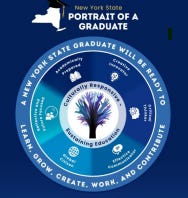
New York’s graduate is:
Academically prepared
A creative innovator
A critical thinker
An effective communicator
A global citizen
Reflective and future-focused
It’s not just about graduation—it’s about life readiness.
The message is clear: Kids need more than content knowledge. They need the skills to connect, reflect, solve problems, and contribute meaningfully in a world that changes fast and demands even faster thinking.
And here’s the real kicker: This doesn’t start in high school. It starts early, in the ways we build relationships, spark curiosity, and develop empathy from the moment a child enters a classroom or a home library nook.
What Will It Look Like in Schools?
It’s more than just standards or assessments. It’s about aligning everything—academic content, social-emotional learning, real-world skills, and culturally responsive practices—into a system that grows kids from the inside out.
Expect to see:
More interdisciplinary connections—think math and science blending with civic inquiry or art projects that solve real problems.
Prioritized SEL and CR-S—where students' identities, cultures, and perspectives are woven into learning.
Financial literacy, climate education, and media literacy taking root in core subjects.
A shift from “sit and get” to student-centered, purpose-driven learning.
In short: less “fill-in-the-blank,” more “what would YOU do?”
How Will It Change a Teacher’s Day?
Some fear this is more work—but really, it’s meaningful work.
It asks us to:
Prioritize relationships as much as rigor.
Shift from “teaching to the test” to teaching for life.
Reflect on what really matters: Are we preparing students for exams, or for engagement, empathy, and equity?
And yes, it may mean rethinking how we structure time, lessons, and expectations—but the shift is one many educators are already making. The POG gives language, legitimacy, and leadership to what great teachers have known for years.
How Will Students Experience It?
They’ll ask better questions—not just answer them.
They’ll see how content connects to community and careers.
They’ll learn to reflect, communicate, collaborate, and lead.
They’ll set goals that matter to them—and be supported in reaching them.
They’ll build identity and belonging alongside academic skills.
In other words, they won’t just get ready for graduation—they’ll get ready for what comes after.
Key Takeaways
The Portrait of a Graduate is about people, not just performance.
It starts now, with how we plan lessons, build relationships, and engage students.
It’s as much about who kids become as what they know.
The six attributes aren’t a final destination—they’re a guide to how we grow.
And it only works if we all buy in: teachers, leaders, parents, and kids themselves.
Call to Action: Where Do We Begin?
✅ Start small. Reflect on which of the six attributes show up in your classroom or home.
✅ Start early. These traits aren’t just for high schoolers—they grow best from Pre-K on.
✅ Start together. This is work we do in the community—with families, colleagues, and kids.
Let’s stop thinking of graduation as an endpoint. It’s a launchpad. And with a vision this powerful, it’s up to all of us to build the runway.
Keep following us as we explore how to design real-life learning experiences and enhance student outcomes through interdisciplinary units that embed essential life and learning skills throughout the year, starting as early as Pre-K.
Together, we’ll move beyond boxed curriculum and toward joyful, authentic learning experiences rooted in curiosity, creativity, and meaningful assessment.
This post was originally published on Dr. Moriarty's Substack.
Read the original on Substack