

A Seat at the Table
How might parents, teachers, and students have more of a say in what comes next?
From In the Draft — Dr. Nicole Moriarty's Substack
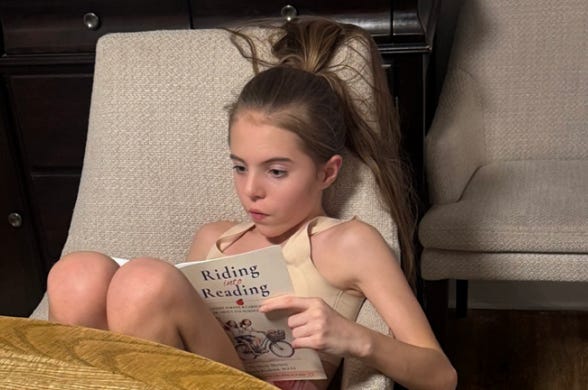

This week, Trici and I released our first book, Riding into Reading. Our kids, nieces, and nephews have been reading it, too. One of them got to the part about Trici as a little girl and asked, “Aunt Trici couldn’t read when she was little?”
I love that question. Our kids know us as the adults who teach reading. In the book, they get to meet the girls who found it hard.
Why We Wrote Riding into Reading
Trici and I came to this book as students who struggled with reading, as teachers who’ve worked with readers and writers at all different stages, and as moms raising four children between us, each with different needs. That last part was the hardest. When it’s your own child struggling, you can know a whole lot about reading and still wonder, Am I doing enough? Am I even doing the right thing?
And then there’s the sheer amount of information parents are expected to wade through. Phonics, fluency, comprehension, reading levels, dyslexia. It can be hard to know what any of it means for the child sitting next to you.
So we started with something most of us can picture. Remember learning to ride a bike? In the book, we use what we call the Literacy Bicycle to explain how the different parts of reading work together. We clear up some common myths and help parents make sense of what they’re seeing at home and hearing at school. We also wanted parents to recognize how much they already know about their own children. That knowledge belongs in the conversation.
From Reading Practice to College Visits
One of the kids you’ll meet in the book is my daughter, Charlotte. We learned in kindergarten that reading was hard for her. She put in hours after school and on weekends, fitting sessions in around the other things she loved to do.
For years, I’d seen how brilliant Charlotte was at creating things, figuring out how pieces fit together, and solving complex problems. I remember one day when she was volunteering at Mineola UFSD’s summer program for multilingual learners. A teacher with years of experience was working on a STEM project and was getting pretty frustrated because she couldn’t solve it. Charlotte, quiet and unassuming, walked over and asked if she could try. In less than a minute, she solved it. The teacher was floored. I was floored.
At school, Charlotte struggled with tests, and it showed up in her grades. How much did those grades tell us about what she could do? Did they show how much she’d grown? What were we missing? What was the school missing? And what opportunities might she miss if those grades were all anyone had to go on?
Those questions became very real when we started looking at high schools. Several told us her middle school grades would keep her out of advanced classes. So we found a school that would let her take them.
She’s taking courses she’s excited about, and she’s kicking ass in them. Her school asks her to be a partner in her own growth. And now, somehow, we’re visiting colleges.

At High Point University’s open house this weekend, I took notes as the president talked about developing the whole student. He spoke about learning to take feedback, build relationships, and find your way through situations where the next step isn’t obvious. I kept thinking about Charlotte. She’s had years of practice doing hard things, asking for help, and figuring out what to try next. How often do our students get to practice those things during the school day?
What Does the Portrait of a Graduate Look Like in a Classroom?
That question was already on my mind as I prepared to work with Long Island superintendents and their teams on the Portrait of a Graduate. We start with the six attributes and use our Behaviors First protocol to get specific about what students would actually do. If we want students to be effective communicators, for instance, what would we hear when two students disagree about how to approach a project? Can we teach and model those moves? When will students get to practice them again? What will we look and listen for as they get better?
Then we look at the experiences we already offer. There’s a place for an on-demand essay, and there’s a place for a project where students develop the questions they want to investigate. Some students are terrific test takers and need more practice working through differences with a group. Others can do remarkable things with what they know and need support showing that knowledge on a timed assessment. They all deserve practice with both. And if students in AP and IB courses get to do sustained inquiry and apply what they know, why would we reserve those opportunities for students who already have access to those courses?
During the workshop, leaders take an assignment or assessment from their own schools and redesign it so students can practice one of those behaviors. I want leaders to experience the thinking that goes into even one redesign. Teachers have ideas for the learning they’ve always wanted to create. They need time to sit with colleagues, work through an idea, try it, and see what their students do with it.
And then comes the question that can bring the whole conversation to a halt. How will we know if students are getting better at any of this?
We’ll explore OYOClass in the workshop because I want to see what happens when students can choose examples of their work and talk about what those examples show. I keep thinking about Charlotte and that STEM project. If you were sitting down with her to talk about what she was ready for next, wouldn’t you want to hear her explain how she solved it?
A Say in What Happens Next
When Trici and I were writing Riding into Reading, we kept thinking about the parent who leaves a school meeting with more questions than they came in with. We wanted that parent to be able to come back and say, “Here’s what I’m seeing at home. Can we talk about what to try next?” Sometimes the book will give them language for something they’ve noticed for years. Sometimes it’ll give them an idea to try at home. Either way, they have more of a say in what happens next.
That’s what I want for teachers, too. Give them the tools and the time to build the kinds of experiences they’ve wanted to offer their students. And give students a real say in what they’re working toward, how they’ll get there, and what they’ll do when their first attempt doesn’t work.
I think about what Charlotte would have missed if her middle school grades had decided which classes she could take in high school. She needed the chance to try those courses and the support to find out what she could do. I want more of our kids to have that chance, and I want them to have a seat at the table when we talk about what comes next.
If you’re working on a Portrait of a Graduate, finding ways to teach Habits of Mind, or rethinking what students get to do and decide in your classrooms, I’d love to hear what you’re trying.
Find Riding into Reading on Amazon.
~N
This post was originally published on Dr. Moriarty's Substack.
Read the original on Substack